
The Software Training Institute IT industry has become a popular career choice for students, graduates, and working professionals. Companies across different sectors use websites, applications, databases, cloud platforms, and other digital systems every day. As a result, people with useful software skills can find opportunities in many areas of technology.
Getting started, however, is not always easy. There are numerous programming languages, tools, and technologies to learn. Beginners may find it difficult to decide what to study first or how to move from basic concepts to practical work.
What Is a Software Training Institute?
A software training institute provides courses designed to teach students different areas of information technology. Depending on the programme, training may cover programming, web development, software testing, databases, cloud computing, data analytics, cybersecurity, or mobile application development.
The Software Training Institute main advantage of structured training is that students have a planned learning path. They can begin with fundamental topics and gradually move towards more advanced subjects instead of trying to learn everything at once.
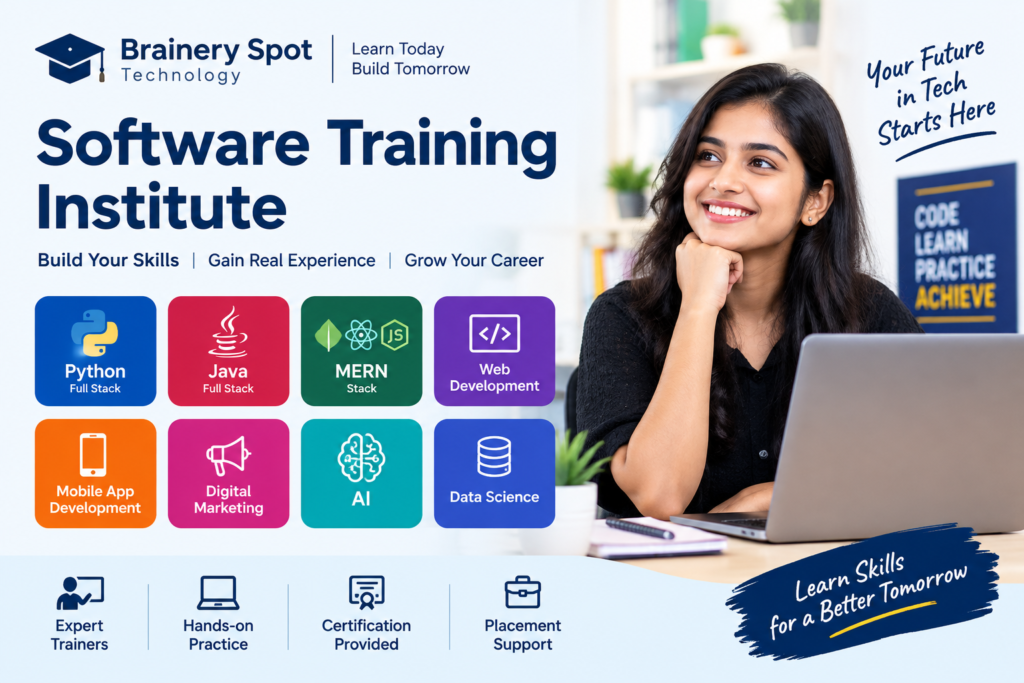
Software Training Institute :Why Is the Right Institute Important?
Not all Software Training Institute provide the same type of learning experience. The quality of the curriculum, trainers, practical sessions, facilities, and student support can vary considerably.
Before joining a course, students should look beyond advertisements and understand what the institute actually offers.
Structured Learning
A clear course structure helps learners stay focused. Fundamental concepts can be introduced first, followed by topics that require a stronger understanding of the basics.
This approach can be particularly helpful for beginners who are entering the software field for the first time.
Skilled Trainers
The trainer has an important role in the learning process. A knowledgeable instructor can explain difficult subjects in simple terms, demonstrate practical examples, and help students correct their mistakes.
Students should consider both the trainer’s technical experience and their ability to communicate ideas clearly.
Practical Training
Software skills develop through regular practice. Reading about programming concepts is useful, but students also need to write code, solve exercises, and test their own work.
Coding activities, assignments, laboratory sessions, and practical exercises can help learners turn theoretical knowledge into usable skills.
Project Experience
Projects allow students to bring different concepts together. They might create a website, develop a small application, work with a database, or build another software solution.
While completing a project, students can learn how to identify errors, test features, organise their work, and make improvements. These experiences can give them a better understanding of software development.
Career Support
Technical skills are important when searching for an IT job, but they are not the only requirement. Students may also need support with resumes, interviews, communication, aptitude tests, and explaining their projects.
Career-oriented guidance can help learners approach the job-search process with greater confidence.
How to Choose a Good Software Training Institute
There is no single institute that will be suitable for every learner. The right choice depends on a student’s interests, existing knowledge, career plans, and preferred technology.
Before enrolling, consider these factors.
Course Content
Read the syllabus carefully. Make sure the subjects match your career interests and that the course covers basic concepts before introducing advanced topics.
A balanced programme should provide a combination of theoretical understanding and practical application.
Teaching Method
Find out how classes are conducted. Practical demonstrations, exercises, discussions, assignments, and projects can make learning more engaging than lessons based entirely on theory.
Trainer Experience
Check the background of the trainers and, if possible, attend a demo class. This can give you an idea of how clearly the trainer explains technical subjects.
Projects and Practice
Ask whether students are given individual projects and regular exercises. Practical experience is particularly valuable for beginners because it provides an opportunity to apply what they learn.
Student Support
Learning software often involves questions and mistakes. Institutes that provide mentoring, doubt-clearing sessions, practice assistance, or additional guidance can be helpful for students who need extra support.
Software Courses Students Can Consider
Students can select a suitable course by considering their personal interests, existing skills, and long-term career plans. Some common areas include:
Full-stack web development
Python programming
Java programming
Software testing
Mobile application development
Data analytics
Data science
Cloud computing
Cybersecurity
Database management
Software Training Institute: Why Projects Matter
Knowing programming commands does not automatically mean that someone is ready to develop software. Real projects involve planning, coding, testing, debugging, and improving the final product.
For example, a web development student could create a small business website. A database learner could develop a basic record-management system. Someone studying mobile development could build a simple application.
Software Training Institute :Why Projects Matter
Completing a software course is only the beginning. Technology continues to change, so learners need to keep improving their skills even after finishing their training.
Regular coding practice, personal projects, learning new tools, and improving problem-solving abilities can help students progress.
Interview preparation is also important. Students should be able to explain their projects, discuss the technologies they have used, and answer basic technical questions confidently.
An institute can provide guidance, but consistent personal effort remains essential.
Questions to Ask Before Joining
Before selecting an institute, students can ask:
What topics are included in the course?
Who will conduct the training?
How much practical work is provided?
Are projects included?
How are student questions handled?
Are assignments and assessments provided?
Which tools and software will be used?
Is interview preparation available?
Can I attend a demo class?
The answers can help students compare institutes and make a more informed decision.
Conclusion
Choosing a suitable software training institute can be a valuable first step for anyone planning a career in IT. A good program should offer more than a certificate. It should help learners understand technical concepts, practise what they learn, complete projects, and receive useful guidance.
A successful career in software requires continuous learning. With proper training, regular practice, and a genuine interest in technology, learners can develop the knowledge and confidence needed to move towards their career goals.