
In today’s competitive job market, having a college degree is important, but it is not always enough to secure your dream job. Companies are looking for candidates who can apply their knowledge, solve real-world problems, and adapt to changing technologies. A degree may help you enter the interview room, but your practical skills help you stand out from other candidates. This is why developing job-ready skills has become essential for every student and fresher in 2026.
Why Is a Degree Alone Not Enough?
A degree provides academic knowledge and helps students understand the fundamentals of their chosen field. However, employers also expect candidates to have practical experience and industry-related knowledge. For example, knowing programming concepts is different from developing a working application. Similarly, understanding digital marketing theory is different from running an actual advertising campaign. Therefore, students need to combine academic knowledge with hands-on experience.
Many graduates face challenges during job interviews because they may understand theoretical concepts but lack confidence in applying them. Employers want to know whether candidates can handle responsibilities, complete tasks, and work effectively with a team. This makes practical knowledge an important part of career development.
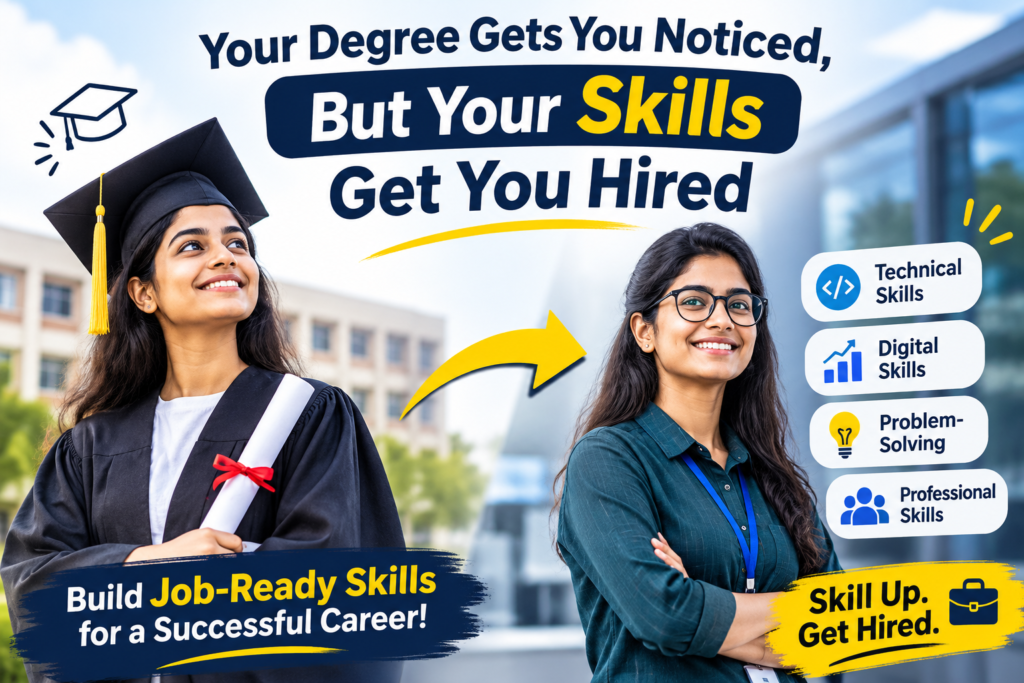
Practical Skills Make You Industry-Ready
Practical learning helps students understand how things work in real business environments. Instead of focusing only on theory, students should work on projects, assignments, tools, and real-time applications. These experiences improve confidence and prepare them to handle workplace challenges.
Some important job-ready skills include:
Technical Skills: Python, Java, Data Science, Artificial Intelligence, and Web Development.
Digital Skills: Digital Marketing, SEO, Google Ads, Social Media Marketing, and Content Creation.
Analytical Skills:Data Analysis, Problem-Solving, and Critical Thinking.
Professional Skills: Communication, Teamwork, Time Management, and Adaptability.
Learning these skills helps students understand industry requirements and explore different career opportunities. Choosing the right combination of technical and professional skills can also help candidates build a strong professional profile.
Why Do Employers Prefer Skilled Candidates?
Recruiters often look for candidates who can contribute to their organisation with less additional training. Candidates with practical knowledge, problem-solving abilities, and good communication skills can adapt more easily to workplace requirements. Furthermore, having project experience and relevant certifications can make a fresher’s resume more attractive.
For example, a candidate who has completed a Python project can explain their coding knowledge through practical examples. Similarly, someone with digital marketing experience can demonstrate their understanding of SEO, keyword research, and online campaigns. These practical achievements help recruiters understand what a candidate can actually do rather than judging them only by academic qualifications.
How Can Students Build Job-Ready Skills?
Building a successful career starts with small and consistent learning steps. Students can improve their professional abilities by following these practices:
1. Choose the Right Skill: Identify your career interest and select a course that matches your goals.
2. Learn Industry-Relevant Tools: Get familiar with the software and technologies used in your chosen industry.
3. Work on Real-Time Projects: Apply your knowledge through practical assignments and project development.
4. Build a Strong Portfolio: Showcase your projects, achievements, and technical abilities.
5. Improve Communication: Practice explaining your ideas clearly and confidently.
6. Keep Learning: Stay updated with new technologies, industry trends, and changing job requirements.
Following these steps consistently can help students improve their knowledge and become more confident when applying for job opportunities.
The Importance of Internships and Real-Time Projects
Internships and practical projects provide valuable learning experiences for students and fresh graduates. They help learners understand workplace responsibilities, follow professional processes, and apply their knowledge to real situations.
Working on projects also teaches students how to identify problems, find solutions, and complete tasks within deadlines. Even a beginner-level project can demonstrate a candidate’s interest in learning and ability to apply new concepts. Additionally, internship experiences can help students understand their strengths and identify areas where they need improvement.
How Technology Is Changing Career Opportunities in 2026
Technology continues to transform the way businesses operate. Artificial Intelligence, automation, cloud computing, data analytics, and digital platforms are creating new opportunities across different industries. As a result, companies increasingly need professionals who can understand and work with modern technologies.
Students who develop knowledge in emerging technologies can prepare themselves for changing industry requirements. For example, learning AI tools can improve productivity, while understanding data analytics can help businesses make better decisions. Similarly, digital marketing skills help organizations reach customers through online platforms.
Therefore, staying updated with technological developments and continuously improving professional knowledge are important for long-term career growth.
The Role of Skill-Based Training in Career Growth
Skill-based training connects classroom learning with industry expectations. It gives students opportunities to practise what they learn and understand how different technologies are used in real-world situations. At Brainery Spot Technology, students can explore technology-oriented learning opportunities and develop practical knowledge in areas such as Python, Java, Data Science, Data Analytics, and Digital Marketing.
Through structured learning, practical exercises, and project-based activities, students can strengthen their technical abilities and understand important industry concepts. Such training can also help learners build confidence, improve problem-solving skills, and prepare for professional challenges.
With proper guidance, hands-on practice, and continuous improvement, students can become more confident and better prepared for career opportunities.
Common Mistakes Students Should Avoid
While preparing for a successful career, students should avoid a few common mistakes that may affect their professional growth.
– Depending only on academic marks without developing practical knowledge.
– Ignoring communication and presentation skills.
– Learning multiple technologies without practicing any of them properly.
– Avoiding projects and practical assignments.
– Not updating resumes with new skills and achievements.
– Stopping the learning process after completing a degree.
Avoiding these mistakes and focusing on consistent skill development can help students build a stronger foundation for their careers.
Final Thoughts
A college degree is a valuable achievement, but your skills determine how effectively you use that knowledge in the workplace. In 2026, companies are increasingly looking for candidates who can think creatively, solve problems, and work with modern technologies. So, don’t stop learning after graduation. Invest in practical skills, gain project experience, and keep upgrading yourself.
Remember, your degree introduces you to employers, but your skills create opportunities for your future. Start developing your skills today, explore new learning opportunities, and take small steps towards building a successful career.