
Artificial Intelligence, or AI, is no longer something people only hear about in technology news. It has quietly found its way into many ordinary activities. When you search for something online, receive a product suggestion, use a voice assistant, or unlock features on your phone, there is a chance that AI is helping behind the scenes.
The same thing is happening in the workplace. Businesses are using AI to sort information, answer customer questions, study data, and take care of repetitive jobs. This does not mean every task is being handed over to a machine. In many cases, AI is simply being used as an extra tool to help people save time and handle information more easily.
What Is Artificial Intelligence?
Artificial Intelligence is a broad area of technology that gives computers the ability to carry out tasks that normally involve human thinking. This can include understanding language, recognizing objects, finding patterns, making predictions, and responding to questions.
Think about a photo application that can identify people or objects in a picture. A person can look at an image and understand what is in it almost instantly. An AI system approaches the same problem differently. It studies examples, learns patterns from data, and then uses those patterns when it receives new information.
How Does AI Work?
Suppose an Artificial Intelligence: How AI Is Becoming Part of Everyday Life and Work system needs to recognize cats in photographs. It can be trained using a large collection of images that contain cats and other objects. By examining those examples, the system learns patterns that help it distinguish one image from another.
Behind this process are several important elements, including data, algorithms, computing power, and trained models.
Machine learning is a major part of modern AI. Deep learning is another approach that allows systems to work with complex patterns. Other areas, such as natural language processing and computer vision, help computers work with human language, photographs, videos, and other forms of information.
AI in Everyday Life
For example, an online shopping website might show products related to something you searched for earlier. A streaming platform may suggest a movie based on the type of content you usually watch. Your email service may automatically separate unwanted messages from the emails you actually want to read.
Smartphones offer even more examples. Voice recognition can turn speech into text, cameras can improve photographs automatically, and translation tools can help people understand another language.
None of these features may feel particularly unusual anymore. That is part of what makes the growth of AI interesting: many intelligent features have simply become normal parts of digital life.
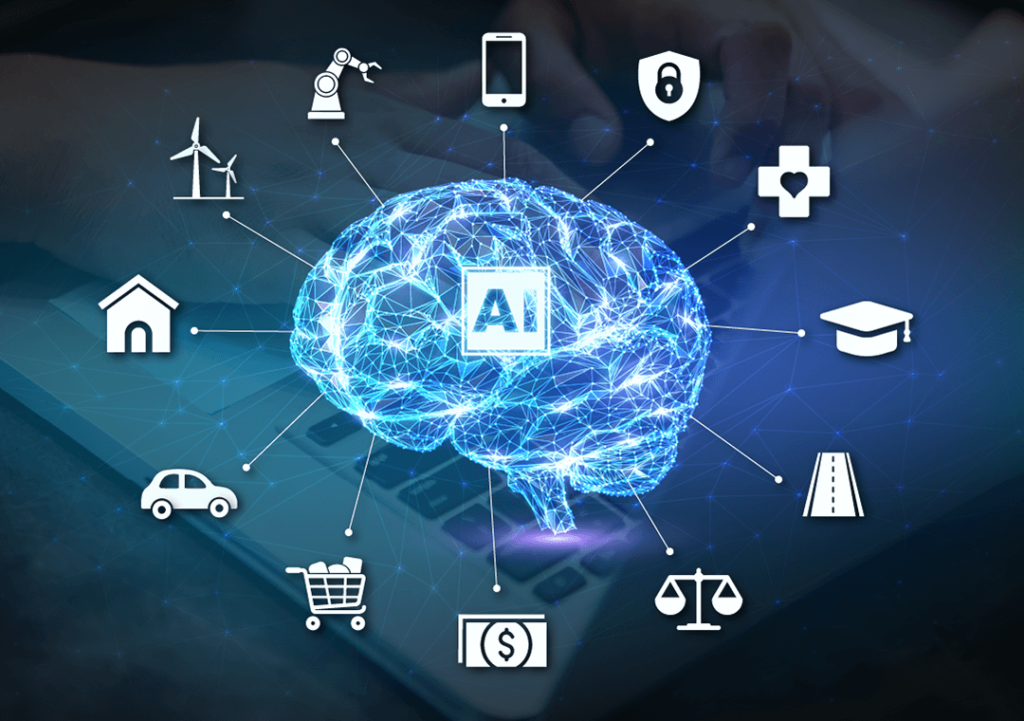
Artificial Intelligence in Business
Companies are also experimenting with AI in practical ways. Customer support is one area where it is easy to see the change. An AI-powered system can answer basic questions, provide information, or guide a customer toward the right service.
Businesses can also use AI when working with large amounts of data. Instead of asking employees to manually examine every record, an AI system can help identify patterns, unusual activity, or information that deserves closer attention.
Still, people remain important. An AI system can process information quickly, but employees bring experience, context, communication, creativity, and judgment to a situation. For many businesses, the useful combination is people working with AI rather than people simply being replaced by it.
Artificial Intelligence in Healthcare
Healthcare is another area where AI is being explored. Researchers and healthcare organizations are looking at ways AI can assist with medical images, large datasets, research activities, and information management.
One reason AI attracts attention in this field is its ability to examine large amounts of information and identify patterns. This can be useful when researchers are working with complex scientific data.
However, healthcare is not an area where technology should be used without careful supervision. AI-generated results can contain errors, so qualified professionals need to review information when important decisions are involved.
The Growth of Generative Artificial Intelligence
Generative AI has changed the public conversation around artificial intelligence. Instead of only recognizing or analyzing information, these systems can create new material in response to a user’s instructions.
A generative AI tool might help someone draft an article, create an image, write computer code, summarize information, or brainstorm ideas. This has made AI useful to people in many different professions.
But there is an important point to remember: an AI-generated answer is not automatically a correct answer. A response can sound polished while still containing a mistake. That is why people should read, check, edit, and verify important AI-generated material before using it.
Benefits of Artificial Intelligence
Automation: Repetitive digital work can be handled with less manual effort.
Data processing: AI can work through large amounts of information in a relatively short time.
Personalization: Websites and applications can offer suggestions based on user activity.
Productivity: AI tools can help people complete certain tasks more efficiently.
Pattern detection: AI can uncover trends or relationships within large datasets.Challenges of AI
Conclusion
Artificial Intelligence has gradually moved from an unfamiliar idea to something people encounter in ordinary digital experiences. It can be found in search tools, smartphones, shopping platforms, entertainment services, business software, healthcare research, and creative applications.
AI is not simply about making computers smarter. It is also about changing how people work with information and technology. How useful that change becomes will depend largely on how thoughtfully people choose to develop and use these systems.