
Introduction
In today’s digital world, websites play an important role in business, education, communication, and entertainment. Every company wants a strong online presence to connect with customers and grow successfully. Because of this rapid digital growth, a Web Designing and Development Course has become one of the most valuable career-oriented programs in the IT industry. Students and professionals who join a Web Designing and Development Course can develop technical knowledge, creative abilities, and practical skills required for modern IT careers.
A professional Web Designing and Development Course helps learners understand how websites are designed, developed, and maintained. The course combines creativity, coding, and real-time project experience to prepare students for software industry jobs and freelance opportunities.
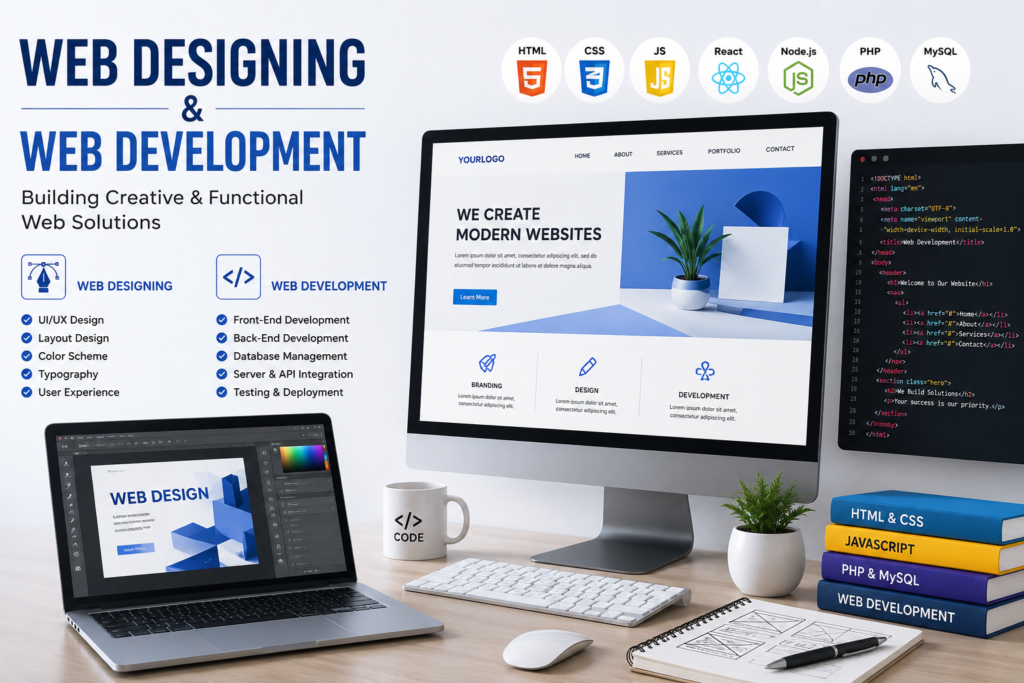
What is Web Designing?
Web designing mainly focuses on the appearance and user experience of a website. A web designer creates attractive layouts, selects colors, arranges content, and builds navigation systems that improve usability. The main goal of web designing is to create websites that are visually appealing and easy to use.
Students in a Web Designing and Development Course learn technologies such as HTML, CSS, JavaScript, Bootstrap, and UI/UX design principles. Responsive web design is also an important topic because websites must function properly on desktops, tablets, and smartphones. Web designers improve loading speed, readability, and user interaction to provide a better browsing experience.
Creativity is one of the most important skills in web designing because designers create unique interfaces that represent brands and businesses effectively.
What is Web Development?
Web development focuses on the coding and functionality of websites. Developers create the technical structure that allows websites to operate smoothly. They manage features such as login systems, databases, forms, payment gateways, and server communication.
A Web Designing and Development Course teaches both front-end and back-end development technologies. Front-end developers work on the visual and interactive parts of websites using HTML, CSS, JavaScript, React, and Angular. Back-end developers use PHP, Python, Java, Node.js, and MySQL to build server-side systems and database management functions.
Web developers ensure websites are secure, fast, responsive, and capable of handling user requests efficiently. Regular testing and performance optimization are also important responsibilities of developers.
Skills Learned in a Web Designing and Development Course
A professional Web Designing and Development Course provides both theoretical learning and practical training. Students learn website structure creation, responsive design, coding concepts, database connectivity, debugging, and website deployment.
The course also includes tools such as Visual Studio Code, Figma, Photoshop, GitHub, and browser developer tools. Students gain hands-on experience by building live projects including portfolio websites, e-commerce websites, blogging platforms, and business websites.
Along with technical knowledge, learners improve communication, teamwork, and problem-solving skills through project-based learning.
Importance of Practical Training
Practical training is one of the most important parts of learning web technologies. Real-time projects help students understand industry standards and improve coding confidence. By working on live websites, learners gain experience in handling website layouts, fixing errors, optimizing performance, and improving user experience.
Career Opportunities in Web Designing and Website Development
Experienced trainers guide students through modern development techniques and industry-level workflows. Practical exposure helps learners prepare for interviews and professional work environments more effectively.
Career Opportunities in Web Designing and Development
The demand for web professionals is increasing rapidly because businesses depend heavily on websites and digital platforms. After completing a web designing or web development course, students can apply for various job roles such as Web Designer, Front-End Developer, Back-End Developer, UI/UX Designer, Full Stack Developer, and Web Application Developer.
Learning web designing and website development improves both creative and technical skills
Freelancing opportunities are also available for skilled professionals who want to work independently on projects for clients around the world. Many businesses hire freelance web developers and designers to create websites, redesign existing platforms, and improve online services.
Web designing and development careers offer strong growth opportunities, flexible work environments, and attractive salary packages for skilled professionals.
Advantages of Learning Web Technologies
One major advantage of learning web technologies is the ability to build websites independently. Students can create portfolios, blogs, online applications, and business websites using their own skills.
A Web Designing and Development Course also encourages creativity and continuous learning because web technologies evolve regularly. Learning modern frameworks, tools, and design trends helps professionals stay updated with industry demands.
Another important advantage is career flexibility. Web professionals can work in IT companies, software firms, digital marketing agencies, startups, or as independent freelancers.
Conclusion
Web designing and website development are excellent career choices and professionals who are interested in technology, creativity, and innovation. These fields provide opportunities to build modern websites, improve digital experiences, and contribute to the growing online world. With proper training, practical learning, and continuous skill improvement, learners can build successful careers in the fast-growing IT industry.